Hormones and Hostas: An Embroiderer's Perspective
First Impressions: A Quiet Statement of Growth
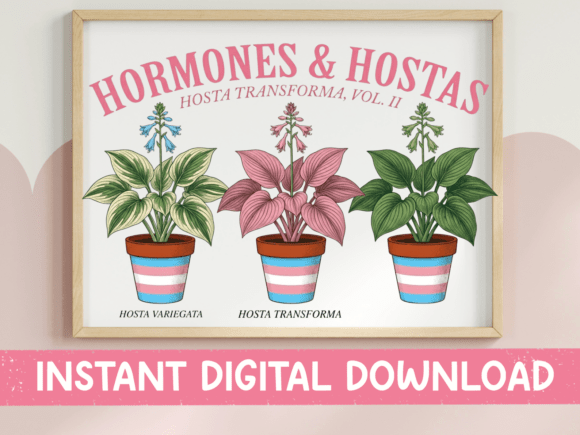
Opening the Hormones and Hostas SVG, my initial thought wasn't about stitches, but about mood. This design isn’t loud; it’s a serene, layered statement. The three lush hostas—variegated, pink, and deep green—feel instantly botanical and calming. Their placement in those terra cotta pots, striped in trans pride colors, creates a powerful, quiet metaphor. It speaks of nurturing, growth, and personal transformation, all wrapped in the gentle aesthetic of a garden. For an embroidery designer, this is promising. It’s a graphic with a strong visual personality that goes beyond mere decoration, making it perfect for projects where the message is as important as the craftsmanship.
The Natural Habitat: Where This Design Thrives
In practical terms, this design naturally belongs on items meant for comfort, reflection, or personal affirmation. Imagine it on a cozy, well-worn sweatshirt—the botanical detail would feel organic on cotton fleece. A custom embroidered tote bag for someone who carries their world with them would be another perfect fit. I’m particularly picturing it as a centered feature on a high-quality apron or a pillow cover for a living room or bedroom; these are items that hold space, literally and metaphorically. The “Hormones Hostas — Hosta Transforma, Vol. II” text adds a touch of whimsical, almost scientific charm, elevating it from a simple motif to a conversation piece. For a small business owner, this adds value: it turns a basic embroidered product into a meaningful gift or a boutique product with a story.
Considering the Stitched Reality
When I evaluate a design for real embroidery work, I think about how it will translate from screen to stitches. The hosta leaves here, with their implied variegation and color shifts, will rely on skillful fill stitch choices and thread color contrast to capture that lushness without becoming overly dense. The striped pots are a clever detail; satin stitches for those stripes could create a beautiful, clean contrast against the more textured fill of the pots and plants. However, the lettering, stretched across the top, demands attention. In embroidery, small lettering can be tricky. It will require a careful review of stitch density and pathing to ensure clarity, especially if you’re planning a smaller hoop size for, say, a cap or a baby item. This isn’t a design I’d automatically run on a tiny, curved surface like a cap without first testing those details on scrap fabric.
Practical Ground: Where Caution is Needed
This design’s charm lies in its detail, which also dictates where it should be used carefully. Very small hoop sizes might compress those details and lose the impact of the three distinct plants. Textured fabrics like thick towels or certain blankets could swallow the finer lines. On stretchy fabric, like a thin t-shirt, robust stabilizer is non-negotiable to prevent puckering around those fill stitch areas. Embroidering on dark fabric presents a wonderful opportunity—the trans pride stripes would pop brilliantly—but requires a thoughtful thread palette to keep the hostas themselves from fading into the background. The key, as always, is to test. Run a sample on your intended fabric, check the thread color contrast in both light and dark mockups, and inspect how the small details, especially in the lettering, hold up.
A Note on Professionalism and Trust
From a commercial perspective, using a design like this effectively speaks to your customer’s trust. A handmade product carrying this motif feels considered and personal. It shows you understand that embroidery can convey more than a logo—it can convey identity and support. For an Etsy seller or creative entrepreneur, this aligns perfectly with markets seeking personalized gifts, wedding gifts for a certain vibe, or nursery decor with a deeper narrative. The finished product’s visual appeal hinges on stitching clarity; clean, well-defined stitches will make the design feel premium and professional, increasing its giftability and buyer engagement. It’s a design that, when executed well, strengthens your brand consistency as a maker who cares about both quality and meaning.
Final Designer Notes Before You Hoop It
My last thoughts, as if I’m prepping this for a client’s custom apparel order, are purely practical. First, this is clearly a machine embroidery design with complex color areas. Plan your thread colors carefully—the pink hosta, the variegated leaves, the pot stripes—they all need distinct separation to work. Second, confirm the licensing for this digital embroidery file before selling finished items. The product category suggests it’s for T-Shirt Designs and Graphics, but always verify the terms for commercial use. Third, don’t skip the scrap fabric test. It’s essential to see how the stitch density behaves and whether any corners or tiny details need adjustment for your specific machine and hoop size.
Ultimately, Hormones and Hostas SVG is a compelling design asset. It offers more than just a pattern; it offers a theme. For embroidery projects aiming to be keepsakes, statements of support, or simply beautiful, handmade products with soul, it’s a strong contender. It asks for a bit of thoughtful setup from the embroiderer—attention to fabric, stabilizer, and stitch execution—but the potential payoff in customer reaction and product value is significant. It’s the kind of design that makes a craft business item feel not just handmade, but heart-made.